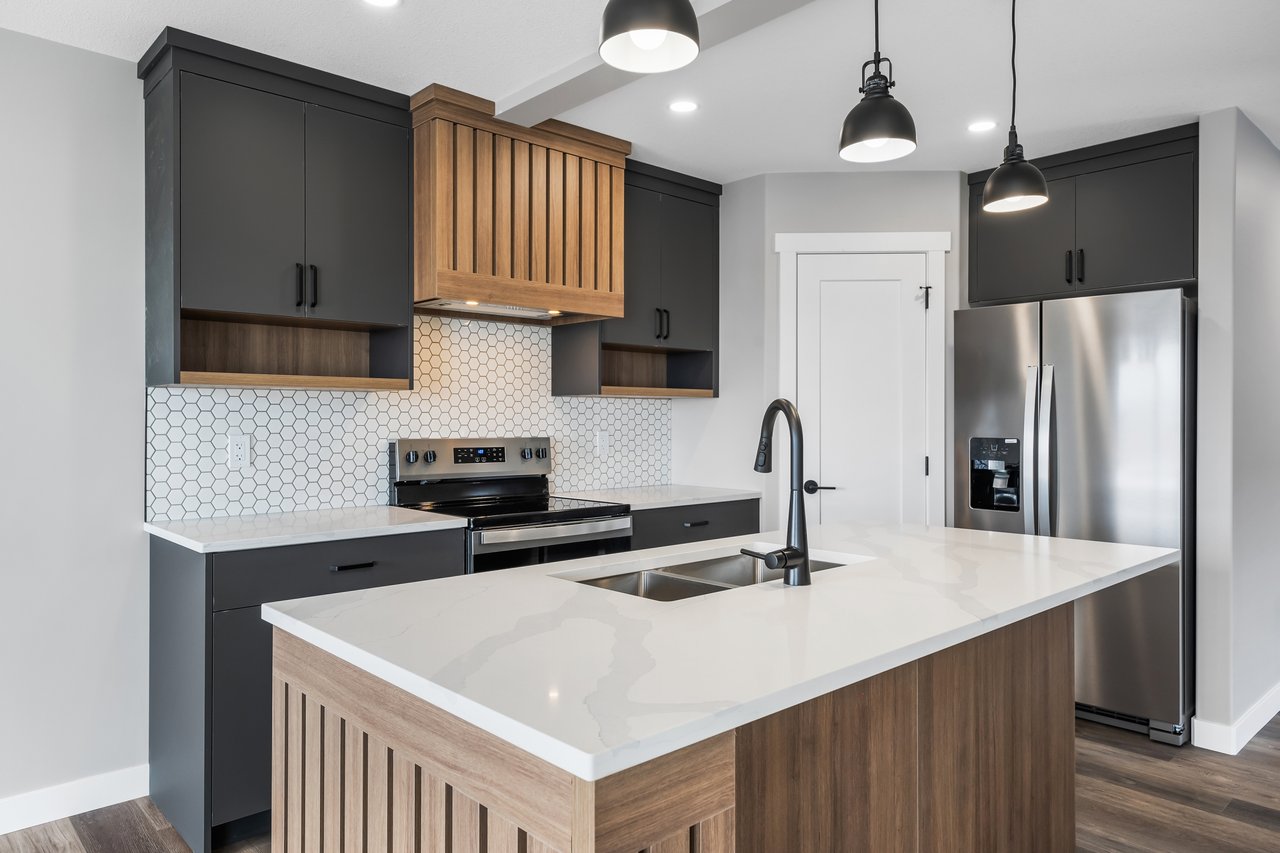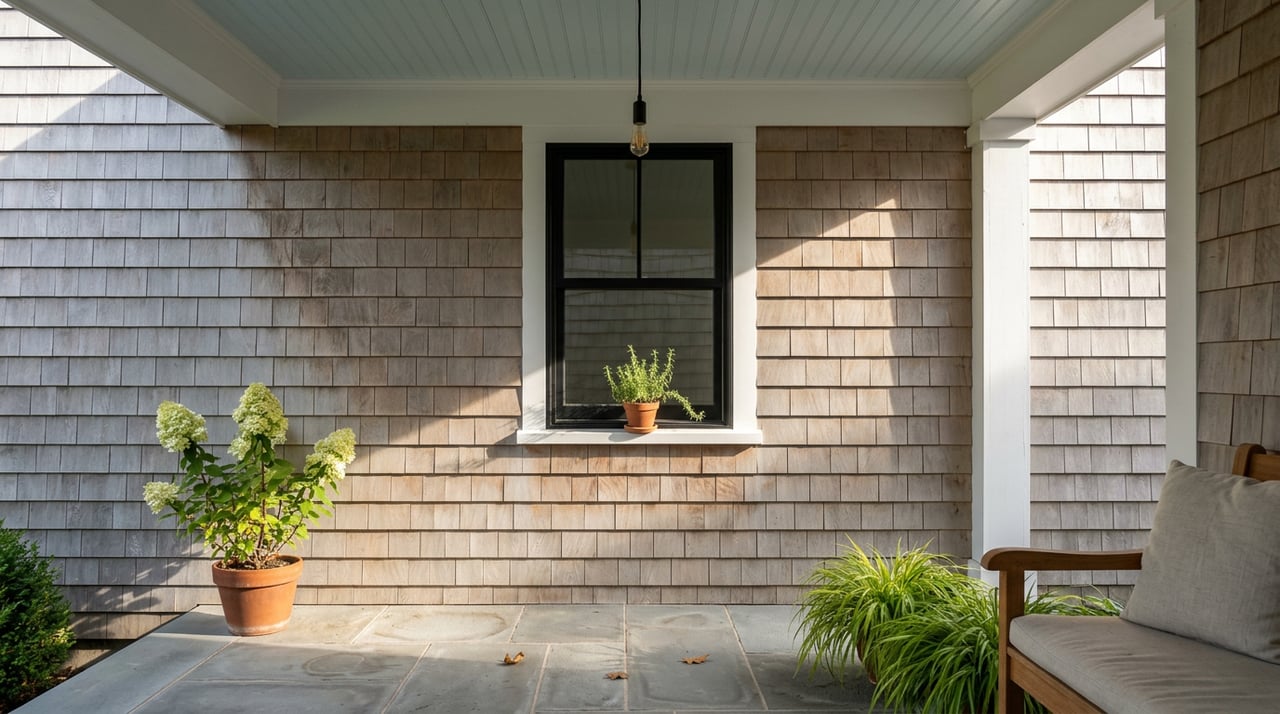
Two houses. Same block count to the sand. One in Belmar, one in Spring Lake. The Spring Lake house trades at roughly four times the Belmar number, and the portal will tell you it is because of "premium residential character." That is a description, not a mechanism.
The mechanism is that one of those houses can be rented to twenty different families across a summer and the other one, by ordinance, cannot. Once you see the rule, you stop reading Monmouth's shore prices as a scenic tax and start reading them as an income-property tax written into the zoning code.
The block-to-beach illusion
Head-count the county first. Monmouth's May 2026 single-family median came in at $745,000 with 37 days on market and roughly 1,150 active listings, a firm-at-the-top, competitive-in-the-middle print. Redfin's January 2026 read landed at $705K with price-per-square-foot at $364, up 5.2% year over year.
Zoom into the beach towns and the county median stops meaning anything. Zillow's home value index in early 2026 pegged Spring Lake at $1,355,039, Belmar at $963,829, Bradley Beach around $1,054,653, Avon-by-the-Sea near $1,628,537, and Sea Girt at $2,216,291. Realtor.com's February 2026 snapshot showed Belmar at a $780K median trading as a buyer's market and Spring Lake at roughly $4.0M trading as a seller's market. That is not a distance-to-sand gradient. Belmar and Spring Lake share a border.
| Town | Early-2026 ZHVI | 2026 seasonal beach badge | Rental regime |
|---|---|---|---|
| Belmar | ~$964K | $80 | Permit-based, flexible |
| Spring Lake | ~$1.36M | $110 | CO required, capped at 4/year, no stays ≤6 days |
| Bradley Beach | ~$1.05M | Permit-based | Permit-based, flexible |
| Avon-by-the-Sea | ~$1.63M | Permit-based | Permit-based |
| Sea Girt | ~$2.22M | Permit-based | Primarily residential, restrictive |
The badge fee is a rounding error. The rental regime is not.
Spring Lake's rental cap is a price mechanism, not a policy footnote
Spring Lake requires a certificate of occupancy for every rental, limits residential rental certificates of occupancy to four per calendar year, and prohibits rentals of six days or less. Read that sentence twice. Four turnovers. No short stays. In a shore town where the summer weekly-rental pattern is the entire investor thesis on the block next door in Belmar, Spring Lake has legislated the weekly-rental thesis out of existence.
That does two things to price. First, it strips the investor bid out of the buyer pool, so the marginal buyer in Spring Lake is a primary or second-home owner, not a yield underwriter. Second, it protects the residential feel that the primary buyer is paying for, which reinforces the premium and holds the pool together. The Spring Lake 2025 Housing Element reports the borough's stock at 87.6% single-family detached and 4.3% one-unit attached, which is the physical footprint of that self-reinforcing loop.
The takeaway for a buyer comparing a Spring Lake bungalow at $1.6M to a Belmar bungalow at $900K three blocks away: you are not paying $700K for quieter streets. You are paying $700K for a legal moat around the streets staying quiet, and for the fact that the seller will never have to compete with a next-door owner running a Memorial-Day-to-Labor-Day rental calendar.
Why Belmar's Q1 2026 "drop" is a mix-shift mirage
If you pulled a Belmar comp report in April, you would have seen twelve single-family closings in Q1 2026 at an average sale price of $1.13M. Against the 2024 and 2025 full-year average of $1.53M to $1.56M, that reads as a $400,000 price collapse. It is not.
Belmar's winter quarter transacts the lower end of the inventory pool. The beach-block and oceanfront trades cluster into late spring and summer, when second-home buyers can walk the property and picture a season. Twelve closings at the bottom of the inventory stack is a mix-shift, not a repricing. Days on market did stretch, from a 40-day peak in 2024 to 74 in Q1 2026, and sell-to-list percentages have drifted down every period since the 2024 peak, but the price band held. Full-year 2026 will almost certainly land back inside the 2024–2025 corridor once the summer beach-block trades close.
A comp pull in April that ignores Belmar's seasonal transaction pattern will misprice a June listing by six figures. The fix is not more comps. The fix is weighting the winter closings at zero.
For a buyer, that means a Belmar seller listing in June is not going to be moved by a Q1 comp deck. For a seller, it means a March listing decision on a beach-block property is a decision to be priced by the wrong inventory pool.
The Mara pipeline changes the yield math, not the comp sheet
The other Belmar variable coming into the price is the Mara by Vermella project at 800 River Road. The Planning Board approved the 198-unit development in August 2025, with 178 market-rate and 20 affordable units on a 3.23-acre parcel adjacent to the NJ Transit station. Russo Development secured construction financing through PNC Bank in March 2026, with completion targeted before fall 2027.
This is rental supply, not for-sale supply. It will not show up in a single-family comp sheet. It will show up in the rental comps an investor uses to underwrite a Belmar duplex against a Spring Lake bungalow (which cannot be rented weekly anyway) or an Asbury Park two-family. If you are buying in Belmar for cash flow, your 2027 rent assumption should not be your 2025 rent assumption. If you are selling a Belmar income property in 2026 to an investor buyer, you are selling in the last window before that supply prints.
Fannie Mae's April 2026 forecast puts mortgage rates at 6.3% for Q2 and 6.1% into 2027, with the Mortgage Bankers Association and NAR clustered in the same low-6% band. The consensus has moved off any near-term return to the 5s. That matters here because a Belmar investor underwriting against 2027 rents at a 6.1% cost of capital and against a 198-unit rental building coming online in the same window is a different investor than one underwriting against 2025 comps at whatever they hoped rates would be.
How to read a Monmouth shore listing after all this
The Zillow number is a starting point. The price you should actually build a bid around is the ZHVI adjusted for three things:
- The town's rental regime. In Spring Lake and Sea Girt, strip out any implicit rental-income value. The regulatory frame will not let you realize it. In Belmar, Bradley Beach, and Avon-by-the-Sea, keep it, but underwrite conservatively against the Mara pipeline for anything you plan to hold past 2027.
- The season of the comp. Belmar Q1 comps understate summer beach-block value. Winter comps on premium Monmouth shore inventory are cold-storage prices, not market prices.
- The lot mix around it. Spring Lake's 87.6% single-family stock is a promise the town keeps. Streets in Belmar or Bradley Beach with a legal three-family on the corner and a Sackman-built luxury townhouse two doors down (Avon Lakeview Townhomes at $1,099,000+ is the current example on the Belmar-Bradley border) are pricing a different product mix than the portal average.
For sellers, the sequencing question flips. A Spring Lake seller should price to the residential comp and market to the primary buyer, because the investor bid is not coming. A Belmar seller with a beach-block property should time the listing to the summer transaction window when their comp set will actually be full. An investor-grade Belmar property is a 2026 asset, not a 2027 asset, and pricing should reflect the closing window that lands before Mara stabilizes rents.
Frequently asked
Is Spring Lake ever the right investor buy? Rarely for cash flow, sometimes for long-hold appreciation on a primary-quality asset. If your model needs weekly summer turns, the four-CO-per-year cap and six-day minimum will kill it before you get to a spreadsheet.
Does Bradley Beach behave more like Belmar or Spring Lake? More like Belmar on rental flexibility and inventory mix, closer to Spring Lake on the residential feel of the interior blocks. Its ZHVI sits between the two for a reason.
How much of the Belmar-Spring Lake price gap is really about the ordinance? Impossible to isolate cleanly, but the New Jersey Treasury's 2024 data has Belmar averaging about $1.11M and Spring Lake averaging about $3.87M for otherwise-comparable single-family stock on the same coastal strip. A gap that wide, on shared geography, is not explained by beach access or badge fees. The rental regime and the primary-buyer pool it protects are doing most of the work.
Buying, selling, or repositioning a Monmouth shore asset in the current window is a timing and structure question before it is a price question. If you want a private read on where a specific block, property, or portfolio sits inside these three mechanisms, Jonathan Guzman works Monmouth and the wider Northern New Jersey coast with an investor's underwriting discipline and a luxury broker's marketing bench. Request a Private Strategy Consultation.