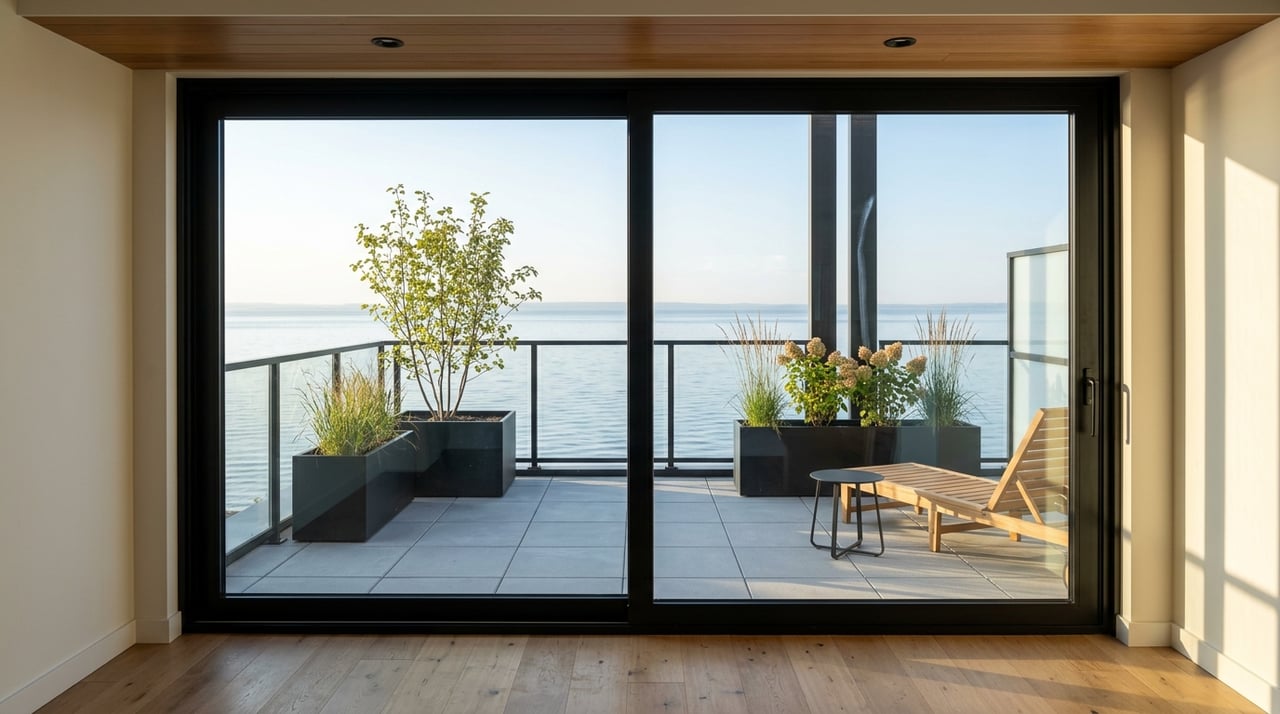
If you want Manhattan access without giving up skyline views, waterfront paths, and a true neighborhood feel, Hudson County’s Gold Coast deserves a close look. This stretch of the waterfront offers a very specific kind of lifestyle: urban, condo-heavy, transit-connected, and built around the river. If you are weighing whether the Gold Coast matches your routine, budget, and housing goals, this guide will help you sort through the lifestyle, commute, and housing picture. Let’s dive in.
What Hudson County’s Gold Coast Feels Like
Hudson County’s Gold Coast is best understood as a waterfront urban corridor, not a suburban housing market. Day to day, life here tends to center on walkability, river views, and easy access to dining, parks, and transit. That is a big part of the appeal for buyers who want convenience built into their routine.
Along the waterfront, public open space plays a major role in how the area lives. In Hoboken, the Hudson River Waterfront Walkway and the Sinatra Drive promenade reopened a key segment in March 2026, restoring pedestrian, running, and cycling access along the river. Jersey City’s planning documents also describe its portion of the Hudson River Waterfront Walkway as a continuous riverfront path that connects major parks and destinations.
The social side of the Gold Coast is another draw. Hudson County tourism highlights Hoboken for kayaking, paddleboarding, jet skiing, waterfront brunch, and food-truck events. Jersey City is often associated with waterfront venues, a broad food scene, and simple access to Manhattan.
That mix gives the area a rhythm that feels active and connected. You can picture morning runs by the river, short walks to coffee, and evenings built around restaurants or waterfront events. For many buyers, that is the core value of living here.
Why Buyers Choose the Gold Coast
For the right buyer, the Gold Coast solves a very practical problem. You get a more urban, car-light lifestyle with strong transit options while staying outside Manhattan. That combination tends to appeal to professionals, frequent commuters, and buyers who want more daily convenience than a traditional suburban layout offers.
The area also gives you access to a wide mix of housing settings within the same corridor. Hoboken, Jersey City, Weehawken, Edgewater, and North Bergen each offer a slightly different balance of density, price point, and housing type. That can make the Gold Coast feel more flexible than people expect at first glance.
At the same time, this is not usually the best fit if your top priorities are a large yard, easy street parking, or lower monthly carrying costs. The lifestyle premium is real, and much of the housing stock reflects an urban format. It helps to be clear about what you value most before you start your search.
Commuting From the Gold Coast
PATH anchors Manhattan access
PATH is the backbone of the Manhattan commute for many Gold Coast residents. It runs 24/7 and connects Hoboken, Jersey City, Newark, and Manhattan. Its World Trade Center and 33rd Street stations also connect to multiple subway lines and Penn Station-area transit.
For Hoboken in particular, weekend service improved in a meaningful way in 2026. Effective May 17, 2026, direct Hoboken to World Trade Center weekend service returned for the first time in nearly 25 years, and dedicated weekend Hoboken to 33rd Street service was added. The official weekend schedule also notes 10-minute service on the Journal Square and 33rd Street lines and 20-minute Hoboken to World Trade Center service.
Hoboken Terminal expands your options
Hoboken Terminal adds another layer of flexibility beyond PATH. NJ TRANSIT says the terminal offers direct service to the Port Authority Bus Terminal in Midtown Manhattan, along with rail-to-ferry and rail-to-light-rail connections. If you value backup options in your commute, that matters.
For buyers comparing locations within the Gold Coast, transit depth can be a deciding factor. Some areas offer more than one realistic way to get into Manhattan, which can make day-to-day life easier. That kind of optionality often supports long-term demand as well.
Light rail, ferry, and local mobility matter too
The Hudson-Bergen Light Rail serves 24 stations across 20.6 miles along the Hudson County waterfront. It links Bayonne, Jersey City, Hoboken, Weehawken, Union City, and North Bergen, helping residents move up and down the corridor without relying on a car.
Ferry service is another major plus. NY Waterway provides routes from Hoboken and Jersey City to Midtown, Brookfield Place, and Pier 11/Wall Street. In Jersey City, local transportation options also include more than 50 Citi Bike stations and on-demand microtransit.
Taken together, these systems support a lifestyle where you may not need to drive every day. For many buyers, that is one of the strongest reasons to focus on the Gold Coast in the first place.
Housing Types Across the Corridor
Hoboken and Jersey City are multi-unit markets
If you are expecting a detached-home market, the Gold Coast may surprise you. Jersey City reports that 82% of its housing units are in multi-unit structures, and city housing data says single-family properties account for only 8% of units. Hoboken is even more concentrated, with 94.5% of housing units in multi-unit structures.
In practical terms, that means your options will often center on condos, apartments, co-ops, and compact townhome-style properties. Inventory can vary by building age, amenities, and exact location, but the broader pattern is consistent. This is a housing market shaped by density and proximity.
Edgewater and Weehawken add variety
Neighboring communities introduce a bit more range. Edgewater’s adopted housing plan notes a mix that includes single-family homes, duplexes, townhouses, mid-rise multifamily, and high-rise multifamily buildings. That gives buyers more variety in housing style while staying in the same general waterfront corridor.
Weehawken also reflects a mixed housing profile. Its zoning includes multi-family and high-rise multi-family districts, and the township’s owner-occupied rate is about 30%. For buyers, that suggests a market with a combination of condos, rentals, and townhome-style options rather than a detached-home-heavy environment.
What Homes Cost on the Gold Coast
As of May 2026, Hudson County’s median sale price was about $683,000. Within the Gold Coast corridor, pricing varies meaningfully by town and by exact location. That gap is one reason local strategy matters so much when you are buying here.
Here is a simple snapshot of recent pricing:
| Area | Recent price point |
|---|---|
| Hoboken | Median sale price about $999,000 |
| Jersey City | Median sale price about $720,000 |
| North Bergen | Median sale price about $590,000 |
| Edgewater | Median sale price about $715,000 |
| Weehawken | Average home value about $883,000 |
| Weehawken | Median listing price about $948,500 |
These numbers show the spread between premium waterfront locations and more accessible parts of the corridor. They also show why buyers often need to balance location, building type, and square footage very carefully.
Neighborhood-level data sharpens the picture. Downtown Jersey City had a median sale price of about $798,667, while Paulus Hook was around $1.05 million. In Hoboken, The Waterfront neighborhood posted a median sale price of about $1.75 million.
That pricing pattern tells you something important. On the Gold Coast, even short geographic moves can create major shifts in cost, housing type, and lifestyle. A well-planned search can help you find the right tradeoff instead of simply chasing the most visible waterfront address.
What Competition Looks Like
Competition is not uniform across the Gold Coast. Hoboken is the most competitive end of the market in this report, with homes selling in about 28 days on average and more than half selling above list price. That tends to reward buyers who are prepared, decisive, and realistic about pricing.
Jersey City and North Bergen have moved more slowly by comparison. Median days on market were around 56 in Jersey City and 61 in North Bergen. That can create more room for comparison shopping, though well-positioned homes can still attract strong interest.
For buyers, this means your strategy should change depending on where you focus. A fast-moving Hoboken search usually calls for tighter preparation and quick decision-making. In other parts of the corridor, you may have a bit more time to evaluate tradeoffs across buildings and neighborhoods.
Who This Lifestyle Fits Best
The Gold Coast tends to fit buyers who want a social urban environment, a car-light routine, and a manageable commute into Manhattan. If you value walkability, skyline views, waterfront access, and a condo-oriented housing mix, the area can check a lot of boxes. That is especially true if your daily routine benefits from transit more than driving.
It is generally a less natural fit for buyers who want a large-lot property or a more traditional suburban setup. Limited detached-home inventory shapes the experience here in a major way. So does the cost that often comes with prime waterfront positioning.
That does not make one choice better than the other. It simply means the Gold Coast works best when your lifestyle goals match the housing stock and the price structure. The more honest you are about that upfront, the better your outcome tends to be.
One Important Due-Diligence Check
Waterfront living brings real advantages, but it also requires careful due diligence. Hudson County has a major flood profile, and Redfin/First Street estimates that 38% of properties face severe flooding risk over the next 30 years. That does not mean you should rule out the area, but it does mean you should ask smart questions early.
When you are evaluating a property, it is worth asking about insurance, building resiliency, and elevation. In a condo or multifamily setting, building-level planning can matter just as much as the individual unit. A strong buying process should account for those factors before you get too far down the road.
Bottom Line on Gold Coast Living
Living on Hudson County’s Gold Coast can be a smart move if you want transit efficiency, waterfront access, and an urban housing mix close to Manhattan. The tradeoff is that you will usually be shopping in a dense, condo-heavy market where pricing can rise quickly near the waterfront. Success here comes from matching your budget and routine to the right town, building, and block.
If you want a strategic read on where Hoboken, Jersey City, Edgewater, Weehawken, or North Bergen fits your goals, Jonathan Guzman can help you evaluate the market with a data-driven, white-glove approach.
FAQs
What kind of housing is most common on Hudson County’s Gold Coast?
- Multi-unit housing is the norm, especially in Hoboken and Jersey City, where most housing units are in multi-unit structures rather than detached single-family homes.
What is the main commute option from Hudson County’s Gold Coast to Manhattan?
- PATH is the core Manhattan connection, with 24/7 service linking Hoboken and Jersey City to World Trade Center and 33rd Street.
What do homes cost in Hudson County’s Gold Coast communities?
- Recent figures in the research report show about $999,000 in Hoboken, $720,000 in Jersey City, $590,000 in North Bergen, and $715,000 in Edgewater, with Weehawken higher depending on the metric used.
What lifestyle does Hudson County’s Gold Coast suit best?
- It tends to suit buyers who want walkability, river views, dining options, a social urban setting, and a car-light lifestyle with easier Manhattan access.
What should buyers ask about waterfront properties in Hudson County?
- Buyers should ask early about flood risk, insurance, building resiliency, and elevation as part of their due diligence.