If you are selling a luxury home in Bergen County, great finishes alone are not enough. In a market where homes have still been selling near or above list price, buyers expect polished presentation, credible pricing, and a smooth path from first showing to closing. The good news is that with the right staging and marketing plan, you can position your home to stand out for the right reasons. Let’s dive in.
Why presentation matters in Bergen County
Bergen County remains a high-value, well-educated housing market with a strong owner-occupier base. The county’s population was estimated at 977,026 in 2025, with median household income of $124,884 and median owner-occupied home value of $623,000. That buyer profile often comes with high expectations around design, condition, and overall presentation.
Recent market data also show why strategy matters. In March 2026, Bergen County’s median sale price was $757,500, the sale-to-list ratio was 101.9%, and median days on market were 74. Greater Bergen REALTORS also reported a 101.2% average list-to-sale ratio for single-family homes in January 2026, with 1.5 months of inventory. That tells you one important thing: even in a competitive market, luxury sellers should not count on scarcity alone.
Stage before you market
For a luxury listing, staging should happen before photos, video, and launch. According to the 2025 NAR staging survey, 83% of buyers’ agents said staging makes it easier for buyers to visualize a property as a future home. That matters because your online presentation often shapes whether a buyer decides to book a showing.
The same survey found that buyers’ agents considered photos, traditional staging, videos, and virtual tours especially important listing tools. In other words, your media is only as strong as what it captures. If you market first and stage later, you usually leave value on the table.
Focus on the rooms buyers notice first
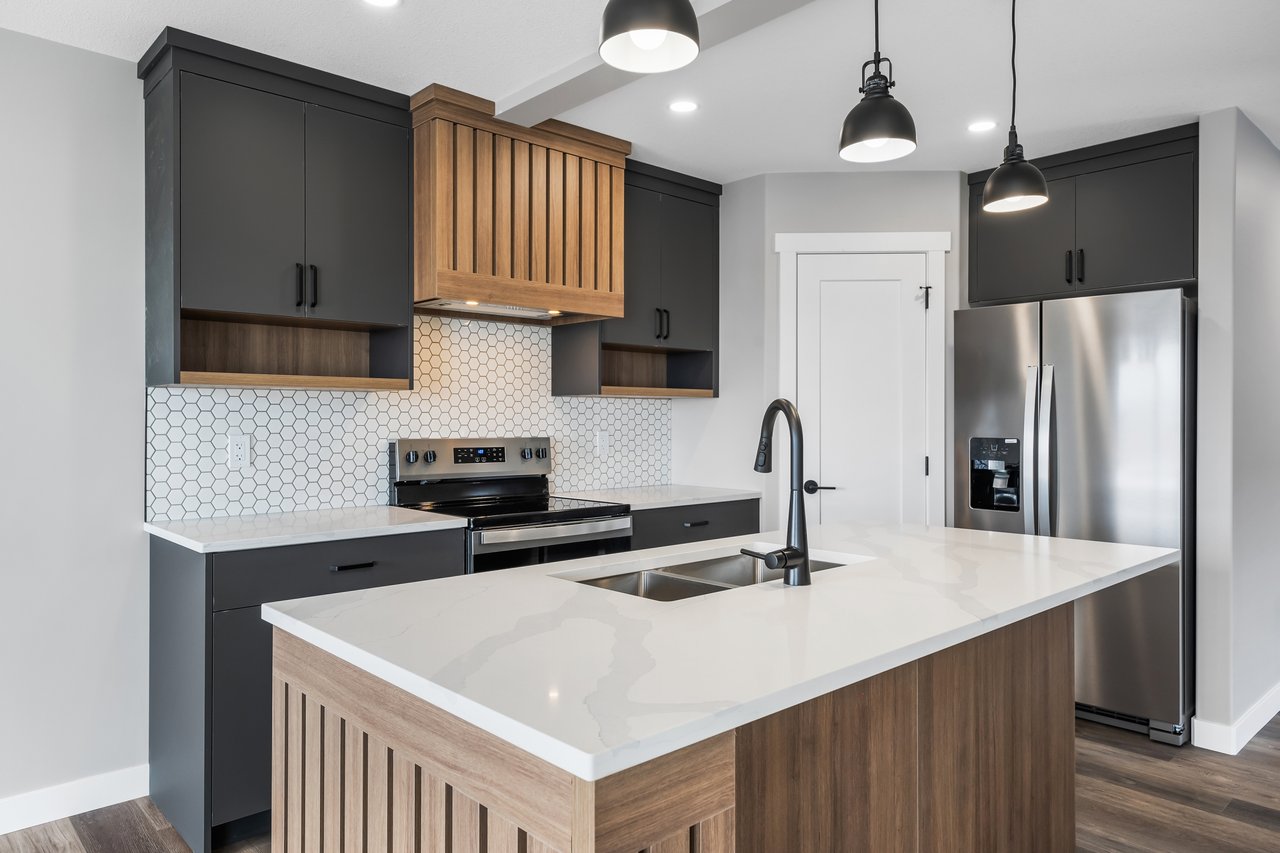
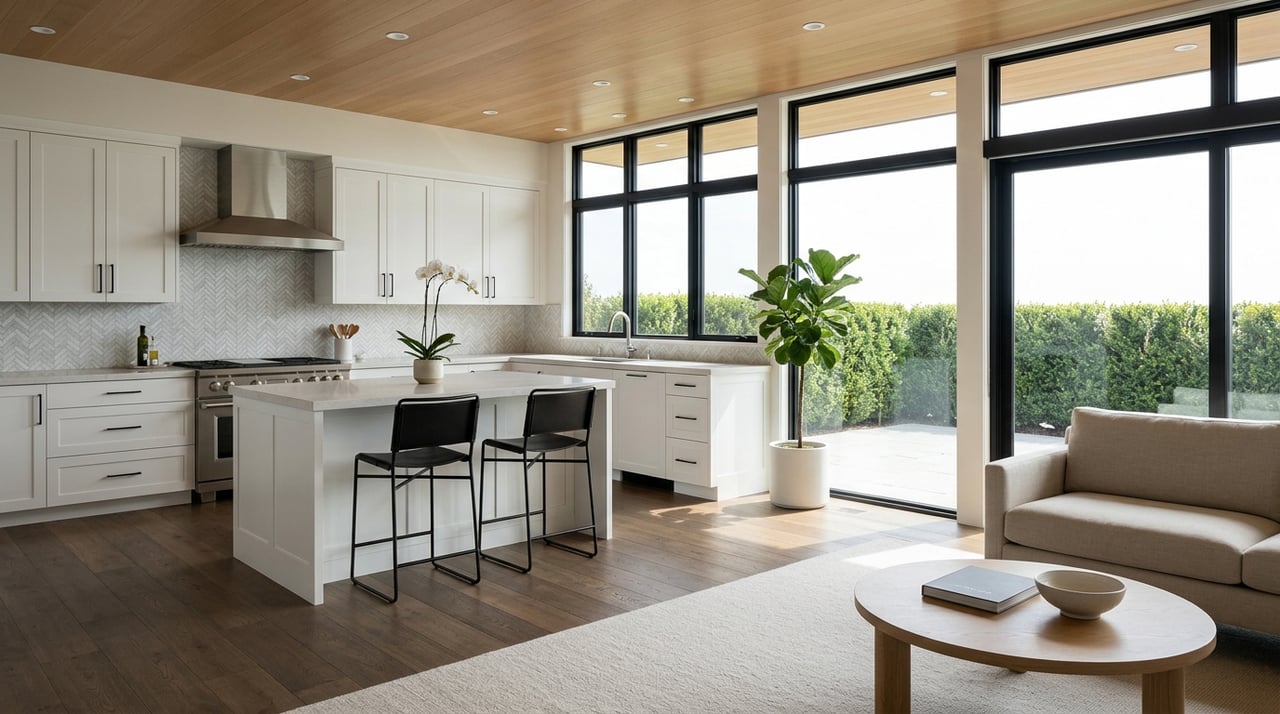
Not every room carries the same weight. Buyers’ agents most often pointed to the living room, primary bedroom, and kitchen as the rooms that matter most for staging. Those spaces often drive emotional response, online engagement, and the sense that a home is move-in ready.
If you have a budget to prioritize, start there. A polished living room can showcase scale and light, the primary bedroom can create a sense of calm, and the kitchen can reinforce quality and functionality. In a Bergen County luxury home, these rooms often anchor the buyer’s first impression.
Start with prep, not décor
The best staging usually begins with what you remove, not what you add. NAR reported that the most common seller preparation steps were decluttering, entire-home cleaning, and improving curb appeal. Minor repairs, paint touch-ups, depersonalizing, carpet cleaning, and professional photos also ranked high.
That sequence is especially important in the luxury segment. Buyers at higher price points tend to notice visual noise, deferred maintenance, and furniture that does not fit the scale of the room. Before you bring in accessories or artwork, focus on clean surfaces, open sightlines, fresh paint where needed, and a calm, edited look.
Know when professional staging makes sense
If your home is vacant or your current furniture does not suit the size or style of the space, professional staging can be a smart move. NAR found that agents choosing staging services most often focused on design quality and price, with two bids being the median number received. That supports a practical approach: compare options and hire for design strength, not just cost.
Luxury buyers are often comparing several polished properties at once. Empty rooms can feel smaller, and awkward furniture can make a home feel less refined than it is. Professional staging can help buyers understand flow, scale, and purpose without distracting from the architecture.
What to fix before listing
A strong luxury launch starts with disciplined pre-listing preparation. You do not need to remodel every space, but you do need to eliminate the issues that pull attention away from the home itself. In most cases, visible flaws cost more in buyer perception than they do to repair.
Here are the first areas to address:
- Declutter every room, closet, and visible storage area
- Complete a deep cleaning across the entire home
- Improve curb appeal with landscaping, entry touch-ups, and clean walkways
- Handle minor repairs such as loose hardware, scuffed paint, or damaged trim
- Depersonalize highly specific décor and family items
- Clean carpets and refresh worn soft surfaces if needed
- Review lighting so each room feels bright and consistent
For premium homes, less is often more. A restrained, well-scaled presentation helps buyers focus on ceiling height, window lines, floor plan, natural light, and finishes.
Price the home with discipline
Luxury marketing only works when pricing supports the story. Bergen County market conditions remain favorable in many segments, but buyers still compare value closely. A polished home can create more interest, but it does not erase the need for a realistic pricing strategy.
The county’s strong sale-to-list ratios suggest well-positioned homes can perform well. Still, days on market vary, and higher price points often draw more measured decision-making. That is why pricing should reflect current competition, condition, presentation quality, and the total financial picture for the seller.
Account for New Jersey transfer fees
For Bergen County luxury sellers, net proceeds can be affected by New Jersey’s seller-paid transfer taxes. The New Jersey Division of Taxation states that the Realty Transfer Fee applies to the seller. In addition, for deeds submitted on or after July 10, 2025, transfers above $1 million are subject to the Graduated Percent Fee paid by the grantor or seller.
The current tiers are:
- 1% for amounts over $1 million up to $2 million
- 2% for amounts over $2 million up to $2.5 million
- 2.5% for amounts over $2.5 million up to $3 million
- 3% for amounts over $3 million up to $3.5 million
- 3.5% for amounts above $3.5 million
For luxury homeowners, this is not a minor detail. It should be built into your pricing conversation and estimated seller net from the start.
Build a marketing plan that matches the price
High-end homes need more than a few listing photos and a sign in the yard. Buyers today often discover a home online first, and their early impression shapes whether they want to see it in person. In the luxury segment, your media package needs to feel polished, accurate, and aligned with the asking price.
A smart launch sequence is simple: stage first, then photograph, then produce video, then publish and distribute. That order helps every marketing asset present the home at its best. It also creates a more consistent brand story across all buyer touchpoints.
Use strong visual media
The 2025 NAR staging survey found that buyers’ agents placed high importance on photos, videos, and virtual tours. For a Bergen County luxury home, that means your marketing should help buyers understand both emotion and layout. Beautiful imagery gets attention, but clarity of flow and scale helps move buyers toward action.
Your media package should usually include:
- Professional daytime photography
- Video walkthroughs that show movement and room connection
- Virtual tours when helpful for remote or out-of-area buyers
- Exterior visuals that capture curb appeal and setting
The goal is to create confidence. Buyers should feel that the home looks elevated, but also true to life.
Keep marketing accurate
Luxury marketing should be aspirational, but it must also be honest. If virtual staging is used, the images should be clearly labeled. Clear presentation protects trust and helps avoid confusion when buyers visit in person.
That is especially important for premium listings. A luxury buyer expects polish, but also expects transparency. Strong marketing is not about overpromising. It is about making the home easy to understand and easy to remember.
Plan disclosures early
A luxury sale should feel organized from the beginning, and that includes disclosures. In New Jersey, flood-risk disclosure is required before a buyer becomes obligated under the purchase contract. Starting March 20, 2024, sellers must disclose certain flood-risk information, including whether the property is in FEMA’s Special Flood Hazard Area or Moderate Risk Flood Hazard Area, along with the seller’s actual knowledge of flood risk.
For older homes, lead-based paint disclosure may also apply. The New Jersey Department of Health notes that federal lead-based paint rules require disclosure of known lead-based paint and lead-based paint hazards before the sale of most homes built before 1978. Sellers should also complete the property condition disclosure statement based on their knowledge of known material defects.
Why disclosure planning helps marketing
Some sellers worry that disclosure discussions will weaken the launch. In practice, the opposite is often true. When your pricing, presentation, and disclosure packet are aligned early, buyers and their representatives can move forward with more confidence.
That matters in the luxury segment, where buyers often expect a smoother and more professional process. Early preparation can help reduce avoidable delays, renegotiation pressure, or credibility issues later in the transaction.
A practical luxury listing checklist
If you want a simple framework, focus on this order of operations:
- Declutter and depersonalize the home
- Deep clean and complete minor repairs
- Improve curb appeal and lighting
- Stage the living room, primary bedroom, and kitchen first
- Finalize pricing with seller-net planning in mind
- Prepare disclosures early, including flood-risk details if applicable
- Capture professional photos, video, and virtual tour assets
- Launch with a coordinated marketing plan
This process supports what Bergen County data already suggest. Strong outcomes come from combining presentation, pricing discipline, and operational readiness.
If you are preparing to sell a Bergen County luxury home, a thoughtful plan can protect your time, your pricing power, and your final result. For a private, data-driven strategy tailored to your property, connect with Jonathan Guzman.
FAQs
Is staging worth it for a Bergen County luxury home?
- Yes. NAR’s 2025 survey found that 83% of buyers’ agents said staging helps buyers visualize a property as a future home.
Which rooms matter most when staging a luxury home in Bergen County?
- The living room, primary bedroom, and kitchen were the top rooms buyers’ agents identified as most important to stage.
What should Bergen County luxury sellers fix before listing?
- Start with decluttering, deep cleaning, curb appeal, minor repairs, paint touch-ups, depersonalizing, and improving overall visual calm.
What transfer taxes should Bergen County luxury sellers plan for?
- New Jersey sellers should plan for the Realty Transfer Fee and, for sales above $1 million, the Graduated Percent Fee that applies to deeds submitted on or after July 10, 2025.
What disclosures matter when selling a Bergen County luxury home?
- Sellers should plan for flood-risk disclosure, disclosure of known material defects, and lead-based paint disclosure if the home was built before 1978.