If you are looking at a fix-and-flip in Passaic County, the margin is usually won or lost before the first demo day. This is a competitive market with limited inventory, fast-moving resale pockets, and older housing stock that can hide costly surprises. If you want to evaluate deals with more confidence, you need a neighborhood-level plan, a realistic rehab budget, and an exit strategy that still works if the market cools. Let’s dive in.
Why Passaic County Gets Investor Attention
Passaic County offers a mix that naturally attracts value-add investors. According to Census QuickFacts for Passaic County, the county has 531,624 residents, 186,203 housing units, a 53.1% owner-occupied rate, and a median owner-occupied home value of $459,500. That owner-renter balance matters because it creates both resale demand and rental fallback potential in many parts of the county.
The county also remains supply-constrained. In the NJ Realtors January 2026 market update, single-family homes posted a $595,000 median sales price, 42 days on market, just 1.5 months of inventory, and 102.8% of list price received. In plain English, buyers are active, but the market leaves very little room for sloppy underwriting or inflated after-repair value assumptions.
Long-term appreciation also tells an important story. The FHFA house price index for Passaic County rose from 171.58 in 2020 to 254.64 in 2024. That kind of run-up can support flips, but it also means you cannot assume easy appreciation will bail out a weak deal.
Start With Micro-Markets, Not County Averages
One of the biggest mistakes investors make is underwriting from countywide averages. Those numbers are helpful for context, but they are not precise enough to support a purchase decision. In Passaic County, pricing, days on market, and buyer depth can change quickly from one town, ZIP code, or neighborhood to the next.
The lower-entry value-add opportunities tend to cluster in parts of Paterson. Realtor.com data for ZIP 07501 shows a median listing price of $377,000 and 69 days on market, while ZIP 07522 shows a median home price of $389,900. These price points may create more room for renovation spread, but they can also come with a more price-sensitive buyer pool and a slower resale timeline.
Mid-market areas often provide a more balanced setup for cosmetic or light-to-moderate rehab projects. Clifton 07014 sits around $559,999 with 29 days on market, Little Falls ZIP 07424 is $607,900 with 27 days on market, Pompton Lakes is $583,944 with 69 days on market, and Hawthorne is $629,999 with 47 days on market. In many cases, these are the kinds of submarkets where ARV is easier to defend because you have a broader retail buyer pool.
Higher-end markets can still work, but the risk profile changes. Wayne sits around $684,321 with 44 days on market, North Haledon around $700,000 with 50 days, and Totowa around $759,900 with 62 days. These towns may support larger dollar gains, but the buyer pool is narrower, so over-improving the property or pushing price too far can quickly extend hold time.
Study Neighborhood-Level ARV Carefully
Even within a single ZIP code, averages can hide major differences. Realtor.com shows that within Clifton 07014, neighborhood median prices range from $457,450 in Passaic Park to $662,000 in Central Nutley. That means your ARV should be based on the subject property’s immediate competitive set, not a broad ZIP code headline.
This is where disciplined comp selection matters most. You want sold properties that match the home’s style, condition, layout, and location as closely as possible. If your projected value only works when you stretch to the highest-priced or least comparable sales, the deal is likely too thin.
A good flip should survive realistic pricing, not perfect pricing. In a market where sale-to-list ratios have hovered around 102% to 103%, buyers are still competing, but that does not give you permission to ignore absorption, condition differences, or neighborhood boundaries. Tight inventory helps strong products, but it can punish overpriced ones.
Know the Housing Stock Before You Budget
Passaic County has the kind of housing stock that can create strong value-add opportunities, but it can also produce expensive surprises. The Rutgers Passaic County housing profile found that 35% of rental units were built before 1939 and 58% before 1960. The same report notes that older units may carry lead, asbestos, plumbing issues, or other maintenance concerns that raise rehab cost and timeline.
That age pattern is not evenly distributed across the county. Rutgers identified older housing stock especially in Paterson, Passaic, Clifton, and Little Falls, while Wayne and West Milford skew more toward homes built from 1980 to 1999. For you, that means older urban and inner-suburban projects may require larger contingency reserves for systems, permits, and hidden-condition repairs.
This is why walk-through impressions can be misleading. A property that looks like a quick cosmetic update may still need electrical, plumbing, or structural work once walls are opened. In Passaic County, protecting your downside often starts with assuming the building is more complex than the finishes suggest.
Match the Rehab Scope to the Buyer Pool
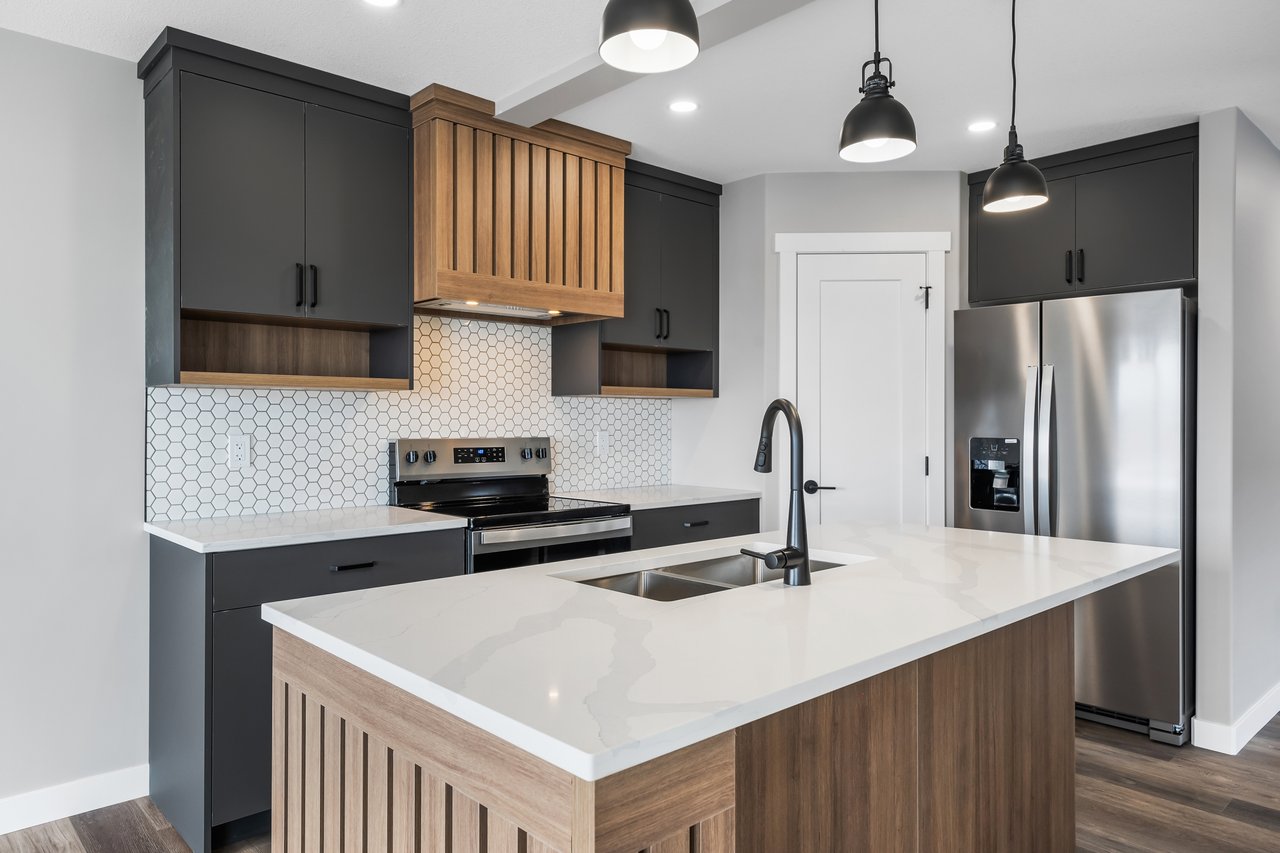
Not every town rewards the same renovation plan. In lower-entry submarkets, buyers may respond best to clean, functional improvements and reliable systems rather than overbuilt finishes. In mid-market areas, a disciplined kitchen, bath, flooring, paint, and curb-appeal program may be enough to maximize value without stretching your budget.
In higher-priced pockets, presentation still matters, but you need to be selective. A narrower buyer pool means your finish package should feel appropriate for the location and price point, not simply more expensive. If your renovation budget depends on a luxury premium that local comps do not clearly support, you are taking unnecessary risk.
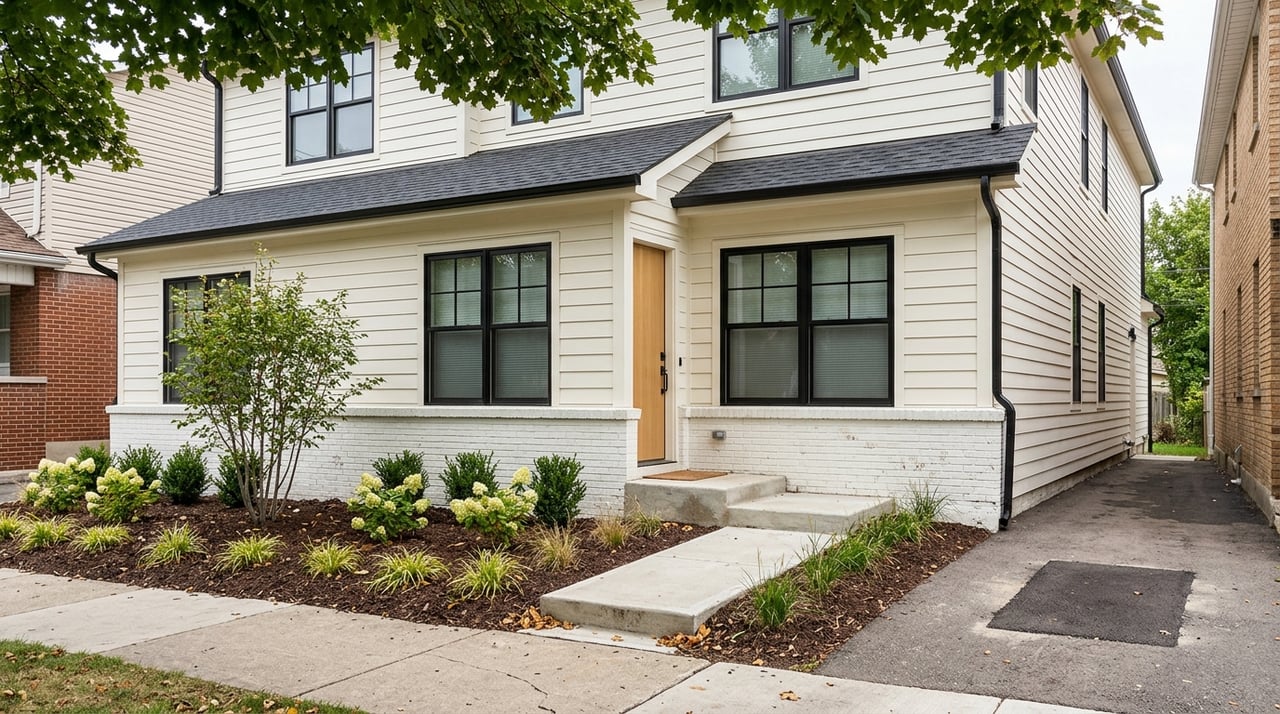
The strongest projects usually stay close to the neighborhood standard while solving obvious buyer objections. Functional layout improvements, deferred maintenance fixes, clean design choices, and strong photography can all support a better exit. The goal is not to build the nicest home on the block. It is to build the home that sells efficiently at a defensible price.
Stress-Test the Exit Before You Buy
In Passaic County, resale speed can vary enough to change your entire return profile. Clifton 07014 is moving at 29 days on market, Wayne at 44 days, Hawthorne at 47 days, North Haledon at 50 days, Totowa at 62 days, and Paterson 07501 at 69 days, based on the Realtor.com local snapshots cited above. That difference can materially change your carrying costs and pricing flexibility.
Before you commit, test the deal against a slower sale timeline than your best-case scenario. Ask what happens if your finished property takes 60 days instead of 30, or if you need a price adjustment to align with market response. A deal that only works in a perfect exit window is usually too fragile.
You should also consider whether the asset has a viable backup plan. Realtor.com’s Passaic County overview shows county median rent at $2,338, with local medians around $2,200 in Paterson, $2,500 in Clifton and Hawthorne, $2,781 in Wayne, and $2,950 in Little Falls ZIP 07424. In some cases, that rental demand can support a hold strategy if the resale market softens or timing changes.
Review Flood and Permit Risk Early
In Passaic County, physical risk review should happen early, not after contract. The county’s hazard mitigation plan exists specifically to reduce losses from natural hazards, and that should be a cue for investors to take flood exposure seriously. In some locations, flood risk can affect both renovation scope and buyer demand.
You should also review permit history and local corridor context. The county’s Strategic Infrastructure Investment Plan highlights priority investment areas where transportation improvements may support redevelopment and private investment. That can be useful context, but it does not replace deal-specific diligence.
A practical pre-close checklist should include:
- Sold comps tied closely to the subject neighborhood and property type
- A realistic DOM assumption based on the local town or ZIP code
- Inspection focus on hidden-condition risk in older housing stock
- Flood-zone and hazard review
- Permit history and code compliance review
- A rental fallback analysis if the flip exit slows
Where Flips Often Pencil Best
The most promising fix-and-flip opportunities in Passaic County tend to be smaller, tightly underwritten projects in the roughly $350,000 to $650,000 acquisition range. That range aligns with the pricing bands where you can often find enough spread for value-add work without depending on a very narrow luxury buyer pool. It also lines up with the broad conclusion from the county research that neighborhood-specific projects usually outperform generic, county-average underwriting.
That does not mean every deal in that band is attractive. It means the odds improve when you combine a sensible entry price, a rehab scope matched to the local buyer, and comps that clearly support your exit. The more assumptions you need to stack, the weaker the opportunity becomes.
If you are evaluating flips in Passaic County, the smartest move is to stay disciplined. Buy based on neighborhood evidence, budget for the realities of older housing, and plan your exit before you swing the first hammer. If you want a more strategic, investor-minded review of a potential acquisition, Jonathan Guzman can help you pressure-test the numbers, the market fit, and the exit path.
FAQs
What makes Passaic County fix-and-flip deals attractive?
- Passaic County offers a mix of tight inventory, strong sale-to-list ratios, varied price bands, and renter demand that can create both resale and rental exit opportunities.
Which Passaic County towns may fit lower-entry flip opportunities?
- Based on the research provided, parts of Paterson such as ZIP codes 07501 and 07522 show lower median price points that may offer deeper value-add potential, though resale timelines can be slower.
Why is neighborhood-level ARV so important in Passaic County?
- Because pricing can vary significantly even within the same ZIP code, your after-repair value should be based on nearby comparable sales, not countywide or broad ZIP code averages.
How does older housing stock affect Passaic County rehab budgets?
- Older homes in areas such as Paterson, Passaic, Clifton, and Little Falls may carry hidden issues like lead, asbestos, plumbing problems, or systems upgrades that can increase cost and timeline.
What should you check before buying a flip in Passaic County?
- You should review sold comps, local days on market, inspection findings, flood or hazard exposure, permit history, and whether the property could work as a rental if the resale exit slows.
Can a rental exit strategy work for Passaic County investment properties?
- In some parts of the county, yes. The research shows county median rent at $2,338, with higher local rent levels in places like Clifton, Hawthorne, Wayne, and Little Falls that may support a backup hold strategy.